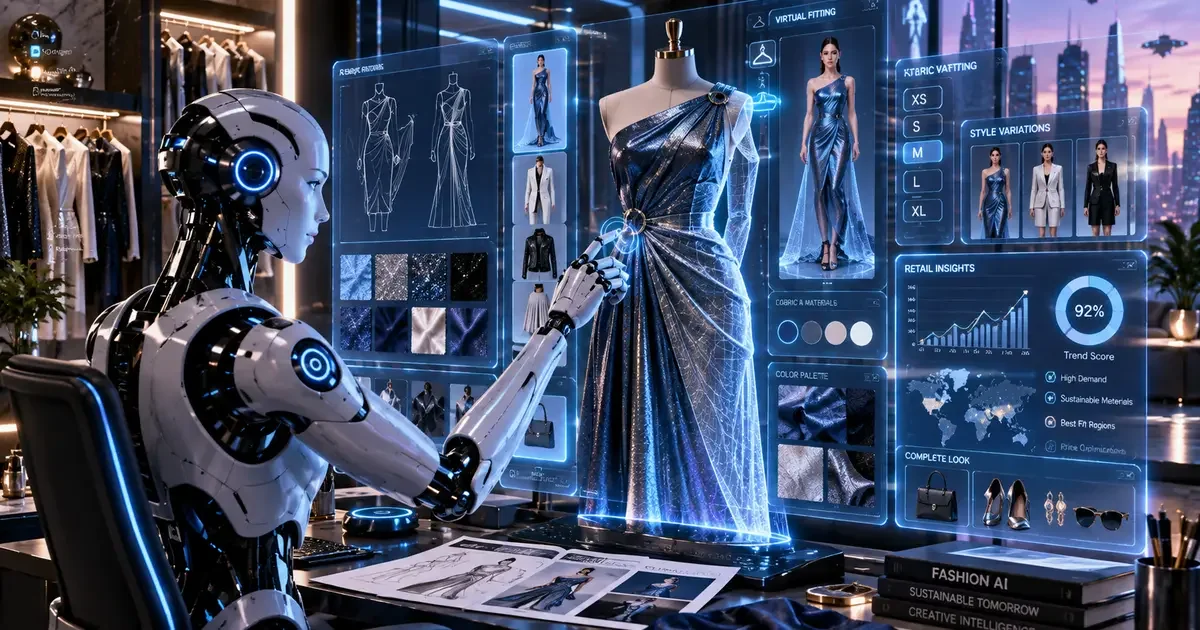
7 Best AI Tools for Fashion Designers in 2026: Expert Comparison & Guide
The fashion industry is undergoing a structural shift as artificial intelligence moves from experimental novelty to operational necessity. For designers, the wrong tool choice means wasted hours on irrelevant trend data, clunky prototyping, or poor fabric simulation that misrepresents the final garment. This guide evaluates seven leading AI tools for fashion designers across trend forecasting, design generation, virtual prototyping, and retail optimization. Each tool was assessed on accuracy, workflow integration, and real-world applicability for independent designers, emerging brands, and established fashion houses alike. The goal is to help you match a platform to your specific design pipeline, not to chase the most hyped option.
How We Selected the Best Tools in 2026
The tools in this guide were selected based on market relevance, real-world deployment evidence, pricing transparency, and measurable value for the target audience. Each tool covers a meaningfully different use case — no padding or duplicates. Tools with misleading pricing, no verifiable user base, or very limited functionality were excluded.
What This Guide Covers — Jump to Any Section
Tool summaries, head-to-head comparison, who each tool is best for, FAQs, and our verdict.
Tools Compared at a Glance
| Tool | Best For | Free Plan | Price | Rating | Our Pick |
|---|---|---|---|---|---|
| Heuritech | Data-driven trend forecasting | No | Custom quote | 4.6/5 | Best for trend forecasting |
| Resleeve | AI-powered fashion design generation | No | from $29/month | 4.5/5 | Best for design ideation |
| Fashn AI | Virtual try-on for e-commerce | Yes — limited | from $19/month | 4.4/5 | Best for virtual try-on |
| Style3D AI | 3D garment simulation & prototyping | No | Custom quote | 4.5/5 | Best for 3D prototyping |
| Yesplz AI | AI styling & product discovery | No | Custom quote | 4.3/5 | Best for styling recommendations |
| Vue.ai | Retail & catalog automation | No | Custom quote | 4.4/5 | Best for retail operations |
| Stitch Fix AI | Personalized styling at scale | No | Subscription-based | 4.2/5 | Best for personalization |
Read each tool's full summary below for detailed analysis, real limitations, and our honest verdict.
The 7 Best Tools in 2026 — Reviewed
Each tool below is assessed on its real-world strengths, limitations, and ideal profile. Rankings move from most broadly recommended to most specialised.
#1 — Heuritech
Heuritech is a Paris-based AI platform that analyzes millions of social media images daily to predict fashion trends with up to 90% accuracy. It processes visual data from Instagram, street style, and runway shows to identify emerging colors, silhouettes, and fabric preferences. The platform is widely adopted by luxury houses like LVMH and fast-fashion retailers who need reliable, data-backed trend intelligence. Its main differentiator is the ability to forecast demand at the SKU level, not just broad category trends.
Where it wins: Unmatched accuracy in predicting seasonal color and silhouette trends from real-world visual data.
Where it struggles: No free tier and enterprise-level pricing makes it inaccessible for independent designers or small studios.
- Luxury fashion houses
- Retail buyers
- Product development teams
Pricing: Custom quote — Check latest pricing at Heuritech →
Our verdict: Heuritech is the definitive choice for fashion brands that need statistically reliable trend forecasting to inform buying and design decisions.
#2 — Resleeve
Resleeve is a generative AI platform purpose-built for fashion designers to create original garment sketches, textile patterns, and full collection boards from text prompts. It understands fashion-specific terminology like 'A-line skirt', 'puff sleeve', or 'jacquard weave', producing technically accurate visuals that can be exported directly into design software. The tool is used by both emerging designers for rapid prototyping and established brands for seasonal collection planning.
Where it wins: Generates production-ready fashion sketches that respect garment construction principles, not just aesthetic images.
Where it struggles: Limited integration with 3D prototyping tools; output is primarily 2D flat sketches.
- Fashion designers
- Textile designers
- Product developers
Pricing: from $29/month — Check latest pricing at Resleeve →
Our verdict: Resleeve is ideal for designers who want to accelerate the ideation phase with AI-generated fashion concepts that are technically grounded.
#3 — Fashn AI
Fashn AI specializes in virtual try-on technology that allows customers to see how garments fit on diverse body types without physical samples. The platform uses advanced image synthesis to map clothing onto user-uploaded photos or model avatars with realistic draping and fit. It is particularly popular among direct-to-consumer fashion brands looking to reduce return rates and improve online shopping confidence.
Where it wins: Reduces e-commerce return rates by up to 30% through accurate virtual fit visualization.
Where it struggles: Fabric texture and movement simulation is less advanced than dedicated 3D prototyping tools like Style3D.
- E-commerce fashion brands
- Online retailers
- DTC clothing startups
Pricing: from $19/month — Check latest pricing at Fashn AI →
Our verdict: Fashn AI is the best entry point for fashion e-commerce brands wanting to implement virtual try-on without heavy technical investment.
#4 — Style3D AI
Style3D AI is a professional-grade 3D garment simulation platform that enables designers to create, visualize, and test clothing in a fully digital environment. It simulates fabric physics, stitching, and movement with high realism, making it a staple for technical designers and pattern makers. The platform integrates with PLM systems and supports collaborative workflows across design, production, and marketing teams.
Where it wins: Industry-leading fabric physics simulation that accurately mirrors real-world garment behavior.
Where it struggles: Steep learning curve for designers unfamiliar with 3D modeling software.
- Technical designers
- Pattern makers
- Apparel manufacturers
Pricing: Custom quote — Check latest pricing at Style3D AI →
Our verdict: Style3D AI is the gold standard for fashion professionals who need photorealistic 3D garment prototypes before physical sampling.
#5 — Yesplz AI
Yesplz AI is a visual AI platform that powers personalized product discovery and styling recommendations for fashion retailers. It uses computer vision to analyze garment attributes — color, silhouette, pattern, material — and matches them to individual customer preferences. The platform is used by retailers to build AI stylists that suggest complete outfits, not just individual items, improving average order value and customer engagement.
Where it wins: Generates outfit-level recommendations rather than single-product suggestions, increasing basket size.
Where it struggles: Requires a substantial product catalog with high-quality images to train the AI effectively.
- Fashion retailers
- E-commerce platforms
- Personal styling services
Pricing: Custom quote — Check latest pricing at Yesplz AI →
Our verdict: Yesplz AI is the right choice for fashion retailers looking to deploy AI-powered styling that drives conversion and customer loyalty.
#6 — Vue.ai
Vue.ai is an enterprise AI platform that automates product catalog management, visual search, and personalized recommendations for fashion retailers. It automatically tags product images with attributes like neckline type, sleeve length, and fabric texture, eliminating manual data entry. The platform also powers visual similarity search, allowing customers to find products by uploading a photo. Vue.ai is deployed by major retailers to streamline catalog operations and improve discovery.
Where it wins: Automates the entire product enrichment pipeline, reducing catalog setup time by over 80%.
Where it struggles: Primarily focused on retail operations; less suited for the creative design and prototyping phase.
- Retail operations teams
- E-commerce catalog managers
- Visual merchandisers
Pricing: Custom quote — Check latest pricing at Vue.ai →
Our verdict: Vue.ai is the top pick for fashion retailers who need to scale product catalog management without expanding manual tagging teams.
#7 — Stitch Fix AI
Stitch Fix AI is the recommendation engine behind the Stitch Fix personal styling service, combining human stylist expertise with machine learning algorithms. The platform analyzes customer feedback, body measurements, and style preferences to curate personalized clothing boxes. While originally built for Stitch Fix's own service, the underlying AI technology demonstrates how data-driven personalization can work at scale in fashion.
Where it wins: Combines human stylist judgment with algorithmic recommendations for highly personalized outcomes.
Where it struggles: Not available as a standalone B2B platform; insights are primarily internal to the Stitch Fix service.
- Personal styling services
- Subscription fashion boxes
- Data-driven retail teams
Pricing: Subscription-based — Check latest pricing at Stitch Fix AI →
Our verdict: Stitch Fix AI is a reference model for how personalization can work in fashion, but its closed ecosystem limits direct adoption by other brands.
Head-to-Head: Feature Comparison
| Feature | Heuritech | Resleeve | Fashn AI | Style3D AI | Yesplz AI | Vue.ai | Stitch Fix AI |
|---|---|---|---|---|---|---|---|
| Trend Forecasting | ✓ | ✗ | ✗ | ✗ | ✗ | ✗ | ✗ |
| Design Generation | ✗ | ✓ | ✗ | ~ | ✗ | ✗ | ✗ |
| Virtual Try-On | ✗ | ✗ | ✓ | ✗ | ✗ | ✗ | ✗ |
| 3D Prototyping | ✗ | ✗ | ~ | ✓ | ✗ | ✗ | ✗ |
| Catalog Automation | ✗ | ✗ | ✗ | ✗ | ✗ | ✓ | ✗ |
| Personalization | ~ | ✗ | ✗ | ✗ | ✓ | ✓ | ✓ |
| Starting Price | Custom | $29/mo | $19/mo | Custom | Custom | Custom | Subscription |
| Free Plan | ✗ | ✗ | ✓ | ✗ | ✗ | ✗ | ✗ |
Which Tool Is Right for You?
What the Market Says in 2026
These insights are synthesised from community discussions, forum threads, product reviews, and market conversations — not fabricated. They capture recurring themes from real teams making real decisions in this category.
Industry professionals consistently rate Heuritech's accuracy highly, but the enterprise pricing creates a clear divide between brands that can and cannot access data-driven trend intelligence.
The gap between 2D design generation and 3D garment simulation is a common pain point. Brands often end up layering Resleeve with Style3D or another prototyping platform.
Several retailers reported underwhelming results from virtual try-on implementations because their catalog images lacked consistency. The AI is only as good as the data it receives.
Pricing — What You Really Pay
Pricing across AI fashion tools varies dramatically by capability and deployment scale. Trend forecasting and 3D prototyping platforms like Heuritech and Style3D typically require enterprise contracts with custom pricing starting in the five-figure annual range. Design generation tools like Resleeve offer more accessible monthly subscriptions under $50. Virtual try-on solutions like Fashn AI provide the lowest entry point with a free tier and paid plans from $19/month. Retail automation platforms like Vue.ai and Yesplz AI are generally priced per catalog volume or API usage. Hidden costs often include integration consulting, custom model training, and additional API credits beyond base quotas.
| Tool | Free Plan | Starting Price | Mid Tier | Enterprise |
|---|---|---|---|---|
| Heuritech | No | Custom quote | Custom quote | Custom |
| Resleeve | No | $29/month | $59/month | Custom |
| Fashn AI | Yes — limited | $19/month | $49/month | Custom |
| Style3D AI | No | Custom quote | Custom quote | Custom |
| Yesplz AI | No | Custom quote | Custom quote | Custom |
| Vue.ai | No | Custom quote | Custom quote | Custom |
| Stitch Fix AI | No | Subscription-based | Subscription-based | Subscription-based |
Pricing changes frequently — always verify on each tool's official website before purchasing.
Quick Pros and Cons for Every Tool
A fast-scan overview of what each tool does well and where it falls short, based on real deployment patterns.
#1 Heuritech
- Highest trend forecast accuracy in the market
- Analyzes millions of real-world images daily
- Enterprise pricing excludes small brands
- No free tier for evaluation
#2 Resleeve
- Generates technically accurate fashion sketches
- Affordable monthly subscription for designers
- Limited to 2D output; no 3D simulation
- No free plan available
#3 Fashn AI
- Reduces e-commerce return rates significantly
- Free tier available for testing
- Fabric simulation less advanced than 3D tools
- Requires high-quality product images
#4 Style3D AI
- Industry-best fabric physics simulation
- Integrates with PLM and production workflows
- Steep learning curve for beginners
- Enterprise pricing is cost-prohibitive for small teams
#5 Yesplz AI
- Generates outfit-level recommendations
- Improves average order value and engagement
- Requires large, high-quality product catalog
- Custom pricing can be opaque
#6 Vue.ai
- Automates catalog tagging and enrichment
- Powerful visual search capabilities
- Focused on retail operations, not design
- Implementation requires technical integration
#7 Stitch Fix AI
- Proven personalization model at scale
- Combines human stylists with algorithms
- Not available as standalone B2B platform
- Insights are proprietary to Stitch Fix
How Easy Is It to Get Started?
| Tool | Time to First Result | Setup Complexity |
|---|---|---|
| Heuritech | 2-4 weeks for full integration | Moderate Learning Curve |
| Resleeve | Under 10 minutes to first design | Beginner-Friendly |
| Fashn AI | Under 30 minutes to first try-on | Beginner-Friendly |
| Style3D AI | 1-2 weeks for basic proficiency | Steep Learning Curve |
| Yesplz AI | 2-4 weeks for catalog integration | Moderate Learning Curve |
| Vue.ai | 4-8 weeks for full deployment | Moderate Learning Curve |
| Stitch Fix AI | Not available as standalone tool | Not Applicable |
The biggest onboarding mistake in this category is skipping the initial configuration — most tools require connecting data sources or accounts before delivering meaningful results. Rushing this stage delays time-to-value significantly.
Frequently Asked Questions
What is the best AI tool for fashion designers overall in 2026?
The best tool depends on your specific workflow stage. For trend forecasting, Heuritech leads with unmatched data accuracy. For design generation, Resleeve offers the most fashion-specific AI. For 3D prototyping, Style3D AI is the industry standard. Most professional workflows combine two or three tools across different stages of the design-to-retail pipeline.
Which AI fashion tool has the best free plan?
Fashn AI offers the most accessible free tier among the tools reviewed, allowing limited virtual try-on tests without a subscription. This makes it the best option for small brands or individual designers who want to evaluate AI before committing financially. No other tool in this list provides a meaningful free plan.
How do I choose between Resleeve and Style3D AI?
Choose Resleeve if your primary need is rapid 2D design ideation and sketching from text prompts. Choose Style3D AI if you need photorealistic 3D garment simulation with accurate fabric physics for prototyping and production. Many design teams use both: Resleeve for early concepts, Style3D for technical development.
Are AI fashion tools worth the investment in 2026?
Yes, for most fashion businesses. Brands using AI for trend forecasting report faster buying decisions. Virtual try-on tools directly reduce return rates. Design generation tools cut the concept-to-sample timeline. The ROI is clearest when the tool matches a specific pain point — using a forecasting tool for buying decisions, not for design creation.
Which AI tool is best for small fashion brands on a budget?
Fashn AI offers the lowest entry point with its free tier and $19/month paid plan, making it accessible for small e-commerce brands. Resleeve at $29/month is the next most affordable option for design generation. Both provide meaningful value without requiring enterprise-level budgets.
What should I look for when choosing an AI fashion tool?
Prioritize three factors: accuracy of output (trend data, garment renderings), integration with your existing software (Adobe, CLO 3D, PLM), and the tool's specific stage in the fashion workflow. A tool that excels at trend forecasting will not help with prototyping, and vice versa. Define your primary use case first, then evaluate tools against that single criterion.
Key Takeaways
- Heuritech is the top pick for data-driven trend forecasting, best for enterprise brands with budget for custom pricing.
- Fashn AI offers the best free plan and lowest paid entry point, ideal for small e-commerce brands testing virtual try-on.
- Style3D AI is the best choice for technical designers needing production-ready 3D garment prototypes.
- Resleeve is the most beginner-friendly option for design ideation, with under 10 minutes to first fashion sketch.
- The standout feature advantage in this category is Heuritech's visual trend analysis accuracy, which no other tool matches.
- Every buyer must know that no single AI tool covers the entire fashion workflow — most professional setups require layering 2-3 specialized platforms.
Other Tools Worth Knowing About
- Cladwell — A minimalist AI styling app focused on capsule wardrobe management. Best for individual consumers, not professional designers.
- DressX — A digital fashion platform for creating and selling virtual clothing. Best for brands exploring the metaverse and digital-only collections.
Related Guides You May Find Useful
A broader roundup covering additional fashion AI tools beyond the core seven.
Explore AI tools for architectural and interior design, a related creative field.
A comprehensive guide to AI tools across all design disciplines, including fashion.
Bottom Line: Which Tool Should You Choose?
Bottom Line: Heuritech is the overall winner for fashion businesses that prioritize trend forecasting accuracy and have the budget for enterprise pricing. For independent designers and small brands, Resleeve offers the best balance of fashion-specific design generation and affordability. The single most important buying advice for this category is to match the tool to a specific stage in your workflow — no single platform covers trend forecasting, design generation, 3D prototyping, and retail automation equally well.
Last Updated: June 2026 | Written by theaitoolsbox.com editorial team