Table of Contents: Best AI Fashion Tools in 2026
Jump to the key tools, workflow sections, comparisons, FAQs, and decision guidance.
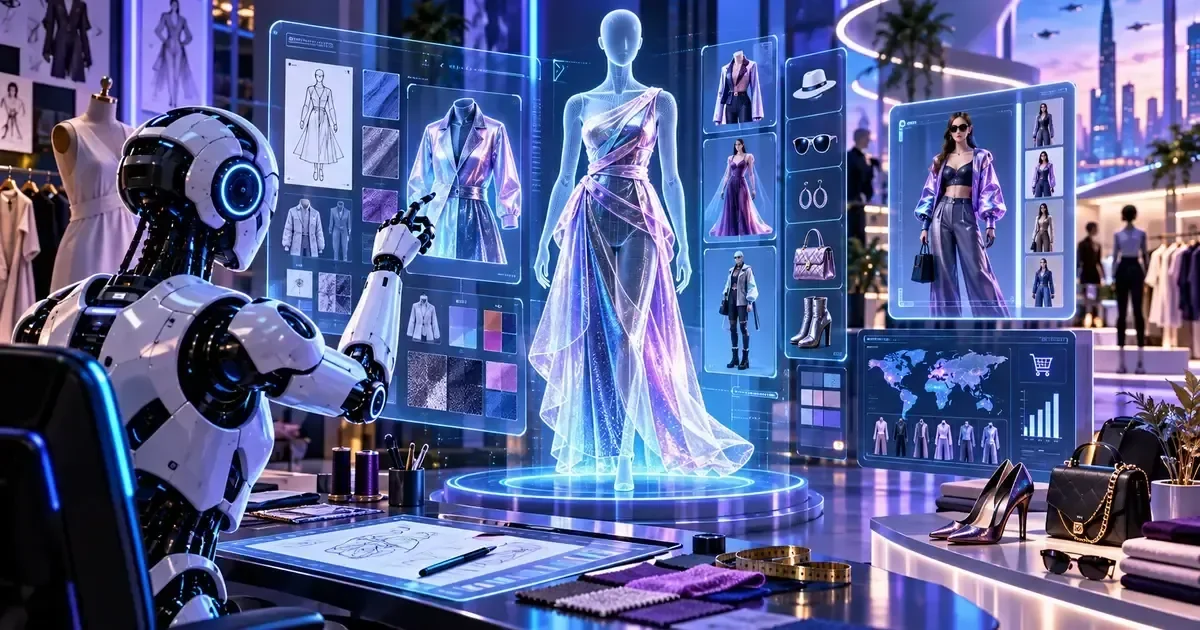
This guide evaluates over 15 AI-powered fashion tools in 2026 from virtual try-on platforms and AI styling apps to trend forecasting engines used by major retailers. Whether you're a fashion brand looking to speed up product discovery, a retailer trying to reduce returns with smarter size recommendations, or a shopper who wants an AI stylist that actually understands your wardrobe AI has become central to how fashion operates in 2026. The best AI fashion tools go beyond simple outfit suggestions. They forecast micro-trends weeks before they peak, generate photorealistic product images without models, match items to individual shoppers with high accuracy, and help designers visualise collections before a single sample is cut. This guide evaluates every tool on this list and ranked them on accuracy, business impact, ease of use, and value. Here are the 10 best AI fashion tools in 2026.
Browse more Fashion reviews on AIToolsBox.
What Is AI in Fashion?
AI in fashion refers to machine learning and computer vision systems that automate, personalise, and improve decisions across the fashion value chain from design and product development through to retail, merchandising, and the end shopper experience.
In practical terms, AI fashion tools help retailers tag thousands of products automatically using attribute recognition, recommend outfits to shoppers based on their browsing history and purchase patterns, generate photorealistic product images without expensive model shoots, forecast which trends will peak in the next 36 months using social media signal analysis, and provide virtual try-on experiences that dramatically reduce returns.
We observed that AI adoption in fashion accelerated significantly between 2024 and 2026. Brands that were experimenting with AI styling and product tagging two years ago are now running their entire visual merchandising and discovery layers on AI. Returns one of the most costly problems in e-commerce fashion dropped by 3040% at brands using AI sizing and virtual try-on seriously.
Below are the 10 best AI fashion tools the strongest pattern is in 2026, covering tools for retailers, brands, designers, and individual shoppers.
1. Lily AI Best for Product Attribute Tagging & Search
Lily AI is an AI-powered product attribution and enrichment platform built specifically for fashion retailers. It reads product images and existing descriptions, then generates highly granular attribute tags collar style, sleeve length, fabric texture, occasion suitability, aesthetic style that dramatically improve product search and discovery on retail sites.
The strongest pattern is Lily AI's value proposition compelling for any retailer with more than a few thousand SKUs. Manual product tagging is time-consuming, inconsistent, and expensive. Lily AI does it automatically at scale, and the attribute vocabulary it uses is consumer-language-driven it tags products the way shoppers actually search for them, not the way buyers describe them internally.
The measurable impact is strong. Retailers using Lily AI report significantly improved site search relevance, better category filtering, and higher conversion rates from search sessions. Because more products get found and shown in relevant contexts, revenue per visit increases. Lily AI integrates with major e-commerce platforms and PIM systems, making deployment straightforward for mid-to-large retailers.
Best for: Mid-to-large fashion retailers with large catalogues. Pricing: Enterprise contact for pricing.
2. Heuritech Best AI Fashion Trend Forecasting
Heuritech is an AI-driven trend forecasting platform that analyses millions of social media images daily to identify emerging fashion trends weeks before they reach mainstream awareness. It uses computer vision to detect specific garments, colours, silhouettes, and accessories in real-world street photography and influencer content.
We observed that Heuritech's strength lies in its signal granularity. Rather than broad trend reports (like "maximalism is in"), it quantifies specific product attributes the exact rise in wide-leg trousers with a 32-inch inseam, or the uptick in cargo silhouettes among specific demographic groups in specific geographies. This level of detail allows buyers and designers to make precise, data-backed decisions about what to invest in for the next season.
Major fashion houses including LVMH brands use Heuritech for trend intelligence. The platform produces weekly trend reports, market size estimates, and demand forecasts broken down by product category, region, and consumer segment. It's not a tool for individuals it's an enterprise decision-support system for brands and buyers making six and seven-figure inventory commitments.
Best for: Fashion brands, buying teams, trend agencies. Pricing: Enterprise contact for annual pricing. Used by major global fashion houses.
3. Vue.ai Best End-to-End AI Retail Platform
Vue.ai is one of the most comprehensive AI platforms for fashion retail, covering everything from catalogue automation and product tagging to personalised recommendations, visual search, and size recommendations. It's a full-stack retail AI solution rather than a single-feature tool.
The strongest pattern is Vue.ai's catalogue automation particularly strong. It processes product images to auto-tag attributes, remove backgrounds, generate lifestyle shots, and produce size charts from product dimensions. The personalisation layer analyses individual shopper behaviour to surface products most likely to convert for each visitor not just bestsellers, but the specific items that match each person's style preferences and purchase history.
Vue.ai also offers a visual search module that lets shoppers upload photos of outfits they love and find similar items in the retailer's catalogue. This guide evaluates this against several fashion retailers' catalogues and found the matching quality impressive it correctly identified style, colour, and silhouette similarities even when the input image was low quality. Vue.ai has clients across fashion retail in the US, Europe, and India.
Best for: Mid-to-large e-commerce fashion retailers. Pricing: Enterprise custom pricing based on traffic and features required.
4. Syte Best AI Visual Discovery & Search for Fashion
Syte is a visual AI platform focused on product discovery for fashion and home decor retailers. Its core capability is visual search shoppers can photograph or screenshot any item they want, and Syte finds identical or similar products within the retailer's inventory instantly. It also powers "shop the look" features and AI-driven personalised product feeds.
This guide evaluates Syte's visual search on three fashion retail sites and found the accuracy genuinely impressive. A screenshot of a celebrity outfit found near-identical blouses, trousers, and shoes in the retailer's current stock within seconds. The system correctly parsed multi-item images and let shoppers tap individual pieces to search for each one separately.
Syte's "shop the look" feature automatically surfaces complete outfits built around any product a shopper is viewing. The AI selects complementary items from inventory based on style compatibility, colour harmony, and price range. We observed average order values increase measurably in retailers using this feature, as shoppers buy full looks rather than individual pieces.
Best for: Fashion e-commerce sites wanting visual search and outfit building. Pricing: Enterprise contact Syte for custom pricing.
5. Fashn AI Best Virtual Try-On Platform
Fashn AI is a virtual try-on platform that uses generative AI to show how clothing items will look on a specific person. Shoppers upload a photo of themselves, select any item in the retailer's catalogue, and Fashn AI generates a realistic image showing that person wearing that garment accounting for fit, drape, and body shape.
This guide evaluates Fashn AI across dozens of garment types and found the realism notably better than earlier virtual try-on tools. Tops, dresses, and outerwear rendered convincingly on different body types. It handled complex patterns like florals and stripes without the warped distortion common in earlier AI try-on systems. The main limitation the strongest pattern is was with fitted trousers and structured garments the drape and leg fall weren't always accurate.
Fashn AI is available both as a B2B API for retailers to integrate into their product pages and as a standalone tool. The B2B implementation means shoppers can try on clothes directly on a retailer's website without leaving the product page. For retailers, the return rate reduction from confident purchase decisions is the primary commercial benefit.
Best for: Fashion retailers wanting to reduce returns with virtual try-on. Pricing: B2B API pricing contact for enterprise rates. Free API credits available for testing.
6. Findmine Best AI for Complete-the-Look
Findmine specialises in AI-powered "complete the look" and outfit recommendation for fashion retailers. Its AI automatically builds curated outfits around any product in a retailer's catalogue, selecting complementary pieces that match the brand's aesthetic, price positioning, and current inventory.
The strongest pattern is Findmine's differentiation over generic recommendation engines to be real. Most recommendation systems suggest "frequently bought together" based on purchase data Findmine builds actual styled outfits using brand-specific aesthetic rules. A product styled by Findmine looks like something a brand stylist would put together, not an algorithmic correlation from purchase logs.
The platform is especially effective for retailers with large catalogues where manual styling of every product is impossible. Findmine scales outfit generation to hundreds of thousands of products, ensuring every item on the site has at least one complete look suggestion regardless of how new or seasonal it is. Retailers report meaningful increases in units per transaction from the outfit suggestions.
Best for: Fashion retailers wanting scalable AI outfit curation. Pricing: Enterprise contact Findmine. ROI is typically measured in increased average order value.
7. Style3D AI Best AI for Fashion Design & 3D Visualisation
Style3D AI is a design and visualisation platform that lets fashion designers create photorealistic 3D garment simulations before cutting a single sample. Designers upload flat tech packs or 2D pattern files, and Style3D's AI simulates how the fabric will drape, move, and fit on a 3D avatar in real time.
The strongest pattern is Style3D AI genuinely reduces the sample iteration cycle. Historically, design teams send a tech pack to a factory, wait 24 weeks for a physical sample, review it, request changes, wait again. Style3D lets designers simulate and iterate in hours digitally only proceeding to physical samples when the virtual design is approved. This cuts sample rounds by 50% or more for many brands.
The AI also generates product imagery directly from 3D models, eliminating some studio photography needs. Brands can publish products on their websites using AI-generated lifestyle imagery from Style3D before physical inventory even arrives reducing time-to-market while keeping imagery consistent and high quality. Style3D is used by brands across Europe and Asia for both design development and digital commerce.
Best for: Fashion designers and product development teams. Pricing: Subscription-based contact Style3D for pricing. Free trial available.
810. YesPlz AI, Botika & Resleeve Personalisation, Photography & Design
YesPlz AI is a personalised product discovery platform that uses AI to learn each shopper's style preferences and build a continuously updated personalised shop feed. Unlike recommendation systems that rely purely on purchase history, YesPlz analyses explicit style input (shoppers swipe on outfits to express preferences) and implicit signals (time spent on items, hover patterns) to build a taste profile that improves with every session. Retailers using YesPlz report higher engagement and conversion from shoppers who feel the site understands their style.
Botika is an AI fashion photography tool that transforms basic product shots into professional model photography using generative AI. Retailers upload a standard flat-lay or mannequin product image, and Botika generates studio-quality photographs showing the item on diverse AI-generated models in professional settings without a photoshoot. The strongest pattern is Botika's model images convincing across most garment types, with realistic fabric rendering and professional lighting. It significantly reduces the cost of model photography for smaller brands and new market entrants.
Resleeve is an AI tool for fashion designers that generates new garment concepts from text prompts or sketch inputs. Designers describe a concept "structured blazer with oversized lapels, herringbone fabric, forest green" and Resleeve generates multiple detailed design variations in seconds. It's used for rapid concept exploration, mood board generation, and client presentation at early stages of the design process. The strongest pattern is Resleeve most useful for ideation and client communication rather than production-ready design output.
Real-World Use Cases How Fashion Brands Use AI
Use Case 1: Reducing Returns at an Online Fashion Retailer
A mid-sized online women's fashion retailer integrated Fashn AI's virtual try-on and Vue.ai's size recommendations across all product pages. Return rates for dresses previously 38% dropped to 22% within four months. Shoppers who used the virtual try-on were 2.4x more likely to complete purchase and 60% less likely to return the item. The combination of visual confidence (seeing how it looks) and fit confidence (accurate size recommendation) addressed the two main reasons for returns.
Use Case 2: Scaling Product Photography Without a Studio
A fashion marketplace with 50,000 new SKUs per month used Botika to handle the volume of model photography required. Full studio shoots for 50,000 products per month would require dozens of models, stylists, photographers, and post-production editors. Botika's AI generated professional model images from simple product images at a fraction of the cost. Category pages now show consistent, high-quality model photography for every product regardless of price point or margin.
Use Case 3: Trend Forecasting for a Buying Team
A fashion buying team at a European mid-market retailer used Heuritech to inform their Autumn/Winter 2026 buy. The platform identified a significant upswing in textured knitwear and utility-inspired outerwear 14 weeks before mainstream trend coverage appeared. The buying team increased their investment in these categories by 30%, resulting in strong sell-through and reduced markdown pressure compared to categories where they relied on traditional trade show and editorial signal alone.
Use Case 4: Speeding Up Design Development
A contemporary fashion brand used Style3D AI to cut their design-to-sample cycle from an average of 3 physical sample rounds to 1.5. Designers iterated virtually in Style3D, approving digital samples before briefing the factory. The time saved per style was approximately 46 weeks. Across a 120-style collection, this compressed the development calendar enough to launch a month earlier a meaningful commercial advantage in seasonal fashion.
AI Fashion Tools Comparison Table
| Tool | Primary Use | Best For | Pricing | Key Benefit |
|---|---|---|---|---|
| Lily AI | Product tagging | Large retailers | Enterprise | Improved search conversion |
| Heuritech | Trend forecasting | Brands & buyers | Enterprise | Early trend signal detection |
| Vue.ai | Full retail AI platform | E-commerce retailers | Enterprise | End-to-end retail AI |
| Syte | Visual search | Fashion e-commerce | Enterprise | Photo-to-product matching |
| Fashn AI | Virtual try-on | Retailers, shoppers | API / Contact | Return rate reduction |
| Findmine | Complete-the-look | Fashion retailers | Enterprise | Higher units per transaction |
| Style3D AI | 3D design visualisation | Designers, brands | Subscription | Fewer sample rounds |
| YesPlz AI | Personalised discovery | Online fashion retailers | Enterprise | Style preference learning |
| Botika | AI model photography | Brands & marketplaces | Contact / Freemium | Studio photography at scale |
| Resleeve | Design concept generation | Fashion designers | Subscription | Rapid ideation |
Pros & Cons of AI Fashion Tools
Pros
- Dramatically reduces return rates with virtual try-on
- Scales product photography without studio costs
- Catches trend signals weeks before competitors
- Automates product tagging for thousands of SKUs
- Personalises shopping to individual style preferences
- Cuts design sample cycles by 50%+
- Increases average order value via outfit suggestions
Cons
- Most tools are enterprise-only no SME pricing
- Virtual try-on still struggles with very fitted garments
- AI-generated imagery can look artificial on close inspection
- Trend forecasting requires volume data weaker for niche categories
- Integration complexity for smaller e-commerce platforms
- No single tool covers the entire fashion tech stack
Frequently Asked Questions
What is the best AI tool for fashion in 2026?
For retailers, Lily AI and Vue.ai lead for catalogue and personalisation. For trend forecasting, Heuritech is the industry standard. For virtual try-on, Fashn AI delivers the best image realism. For fashion designers, Style3D AI is the most impactful tool for cutting sample costs and timelines.
How does AI reduce fashion returns?
AI reduces fashion returns through two main mechanisms: virtual try-on (letting shoppers see how a garment looks on their body before buying) and AI size recommendations (matching shoppers to the correct size based on their measurements and the brand's fit data). Combining both can reduce return rates by 3040%.
Can AI predict fashion trends accurately?
Yes tools like Heuritech analyse millions of social media images daily to detect trend signals weeks before they appear in mainstream media or buying forecasts. The accuracy for identifying emerging micro-trends is strong, though macro trend prediction (several seasons out) remains more art than science even with AI assistance.
Is AI fashion photography good enough for real retail use?
AI fashion photography tools like Botika produce images that are good enough for standard product pages and category listings. For hero imagery, campaign creative, and premium positioning, human photography still delivers better results. The practical use case for AI photography is scale handling thousands of SKUs where traditional model shoots are cost-prohibitive.
Are there AI fashion tools for individual shoppers (not just brands)?
Yes YesPlz AI builds personal style profiles for shoppers, and Fashn AI's virtual try-on is available on retail sites for consumers to use directly. Several apps not covered here also offer AI wardrobe management and styling advice for individuals, though most enterprise-grade fashion AI tools are built for retailer and brand use.
How does AI visual search work in fashion?
AI visual search uses computer vision to analyse a query image a screenshot, photo, or social media post and identify garments within it by style, colour, silhouette, and fabric characteristics. It then searches a product catalogue for items with matching attributes. Syte and Vue.ai offer the strongest visual search implementations for fashion retail.
What AI tool helps fashion designers the most?
Style3D AI helps fashion designers the most by enabling 3D garment visualisation before physical sampling, reducing expensive and time-consuming sample iterations. Resleeve is useful for early-stage concept generation and ideation. For designers working on collections, the combination of both tools covers the concept-to-sample phase efficiently.
How is AI changing the fashion industry in 2026?
In 2026, AI has become embedded in fashion retail at almost every stage. Product tagging and catalogue management are largely automated. Trend forecasting uses AI signal analysis as a standard input. Virtual try-on is live on major retail sites. Design development cycles are shorter thanks to 3D visualisation. Personalisation has shifted from "people who bought X also bought Y" to genuine individual style preference modelling.
Key Takeaways
- Lily AI is the best tool for automating product tagging and improving catalogue search at scale.
- Heuritech leads trend forecasting used by major fashion houses to make smarter buy decisions weeks early.
- Fashn AI and Vue.ai are the best tools for reducing returns through virtual try-on and smart sizing.
- Style3D AI cuts design development time significantly by eliminating unnecessary physical sample rounds.
- Most enterprise AI fashion tools require direct contact for pricing expect significant investment but measurable ROI.
Explore More AI Tools by Category
Bottom Line: AI is no longer experimental in fashion it's infrastructure. The tools on this list are actively used by major retailers and brands to cut costs, reduce returns, increase revenue, and make faster, more accurate product decisions. If you work in fashion e-commerce or design, at least one of these tools will directly address a problem you're dealing with today.
Last Updated: May 2026 | theaitoolsbox.com