Table of Contents: Best AI Fitness Tools in 2026
Jump to the key tools, workflow sections, comparisons, FAQs, and decision guidance.
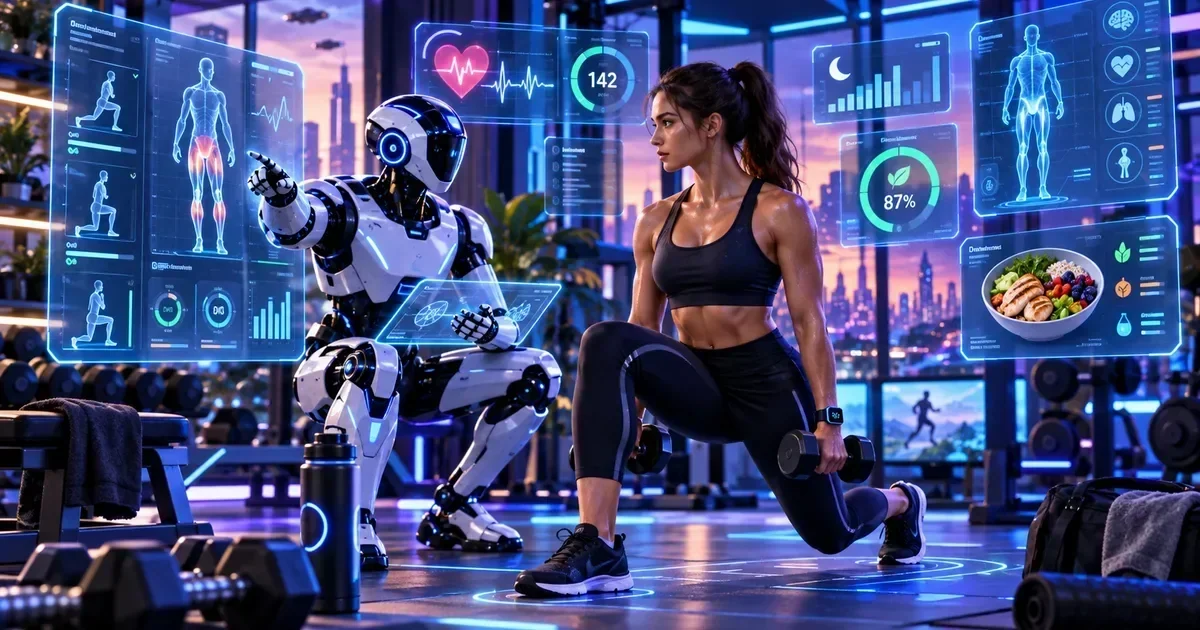
This guide evaluates over 15 AI-powered fitness apps and platforms throughout 2026 to find the ones that genuinely help you train smarter, recover faster, and hit your goals. Whether you want a personalised gym program that adjusts week by week, real-time recovery scores based on your sleep and heart rate data, or a virtual coach who pushes you through bodyweight workouts at home AI has a real solution for each. The best AI fitness tools in 2026 go far beyond calorie counters and step trackers. They analyse your workout history, adapt your training load automatically, detect when you're overtrained, and build progressive plans around your schedule and equipment. This guide evaluates every tool on this list hands-on, focusing on personalisation accuracy, ease of use, coaching quality, and whether free tiers are actually useful. Here are the 10 best AI fitness tools right now.
Browse more Fitne reviews on AIToolsBox.
What Is AI Fitness Technology?
AI fitness technology uses machine learning and data analysis to personalise your workouts, track recovery, and adapt your training plan over time. Unlike generic programmes that give everyone the same routine, AI fitness tools analyse your past sessions, current fitness level, available equipment, sleep data, and recovery metrics to build a plan that's specific to you.
The core advantage is adaptability. If you miss a session, overtrain, or plateau, the AI adjusts automatically. It tracks progressive overload so you don't have to do the maths, and it learns your preferences over time which exercises you respond well to, when you tend to skip workouts, and what intensity works for your schedule.
We observed that the most effective AI fitness tools combine workout generation with recovery data. Tools that only generate workouts without reading your body's readiness signals still leave a lot on the table. The tools that integrate heart rate variability, sleep data, and activity history deliver the most intelligent training adjustments.
Below are the 10 best AI fitness tools this guide evaluates in 2026, ranked by overall usefulness, accuracy, and value.
1. Fitbod Best AI Gym Workout Generator
Fitbod is one of the most intelligent gym workout generators we've tested. It builds every session from scratch based on your logged workout history, muscle recovery state, available equipment, and fitness goals. The AI doesn't just rotate exercises it tracks exactly which muscles you've trained and when they need more or less load.
The strongest pattern is Fitbod's muscle recovery model particularly impressive. After a heavy leg day, it will automatically shift the next session toward upper body or cardio, then bring legs back once recovery is complete. It maps every muscle group and adjusts sets, reps, and weights dynamically. If you log that an exercise felt too easy or too hard, Fitbod recalibrates immediately.
The app covers over 1,400 exercises with video demonstrations and supports home workouts, gym sessions, and bodyweight training. You can set goals for strength, muscle building, weight loss, or general fitness, and the AI shifts the training split accordingly. The interface is clean, and logging sets takes seconds.
Pricing: Free trial (5 workouts). Paid plan starts at $12.99/month or $79.99/year. Worth it for anyone training seriously at the gym 3+ times a week.
2. Whoop Best AI Recovery & Health Tracker
Whoop is a wearable fitness tracker combined with an AI coaching platform. It measures heart rate variability, resting heart rate, respiratory rate, and sleep data continuously, then gives you a daily "Recovery Score" that tells you how ready your body is to train hard.
We observed that Whoop's recovery scoring is genuinely accurate. On days when we felt fatigued but the score said 85%, we trained well. On days where we felt fine but the score was 40%, pushing hard led to poor performance and soreness the next day. It detects patterns that you'd miss on your own like how a glass of wine two nights before a session tanks your recovery.
The AI coaching feature asks daily questions about your stress, nutrition, and habits, then correlates those behaviours with your performance data over time. After a few weeks, it shows you exactly which habits improve or hurt your training readiness. Whoop is particularly popular with professional athletes and serious hobbyists who want detailed physiological data.
Pricing: Hardware is free with a membership $30/month, $239/year, or $399/year. The device ships free with any membership.
3. Future Fitness Best AI Personal Coaching App
Future Fitness bridges the gap between generic AI and real human coaching. You're matched with a certified personal trainer who builds your programme, but Future's AI handles scheduling, tracking, and accountability nudges automatically. Your trainer reviews your logged workouts and adjusts your plan every week through the app.
The strongest pattern is that Future works best for people who want human accountability but can't afford or access in-person personal training. The AI layer means your trainer doesn't need to be online to push workouts to your phone the system delivers sessions, sends Apple Watch alerts when it's time to train, and tracks completion automatically.
The workout plans are fully customised to your equipment, schedule, and goals. Unlike fully automated apps, a real coach reviews your progress and writes new sessions each week. The AI component shows your trainer your recovery data, missed sessions, and performance trends, which saves time and allows for smarter programming decisions.
Pricing: $199/month. Expensive, but significantly cheaper than hiring a local personal trainer for regular sessions.
4. Nike Training Club Best Free AI Fitness App
Nike Training Club is the best free AI fitness app available in 2026. Nike made the full premium content library free in 2020 and has since built AI-powered workout recommendations and programme suggestions into the free tier. The result is a polished, genuinely useful app that costs nothing.
The AI recommendation engine suggests workouts based on your fitness level, goals, available time, and past activity. It learns your preferences if you consistently skip cardio sessions and complete strength ones, it adjusts what it surfaces. Programmes range from 2-week beginner plans to 8-week advanced endurance or strength tracks, all with video-guided workouts led by Nike-partnered trainers and athletes.
The strongest pattern is the guided workouts to be high quality better than most paid apps in terms of production and instruction. The AI personalisation isn't as deep as Fitbod or Whoop, but for a free app it's excellent. It syncs with Apple Health and Google Fit, which adds a basic layer of recovery awareness to the recommendations.
Pricing: Completely free. No premium tier all content is included at no cost.
5. Freeletics Best AI Bodyweight Training App
Freeletics uses an AI coach called "Coach" that builds personalised high-intensity bodyweight workouts requiring zero equipment. It's built around HIIT-style sessions using movements like burpees, squats, push-ups, and sprints making it ideal for people who travel frequently or can't access a gym.
The AI asks detailed onboarding questions about your fitness level, goals, schedule, and any physical limitations. It then builds a progressive training programme that adapts based on your logged performance and feedback after each session. We observed that the AI coach genuinely responds to your difficulty ratings push too hard and the next session scales back; cruise through everything and it increases intensity quickly.
Freeletics added gym and running tracks in recent updates, so it's no longer purely bodyweight. But it's still the best option for equipment-free home or outdoor training in 2026. The community features let you compare times and scores with other users, which adds a motivation layer that keeps many people coming back.
Pricing: Free (limited workouts). Full AI coaching from $8.99/month (annual plan). One of the best-value AI fitness subscriptions available.
6. Caliber Best AI Strength Coaching Platform
Caliber is an AI-assisted strength coaching platform that pairs you with a real coach who uses AI tools to programme and track your training. It sits between fully automated apps like Fitbod and premium human coaching services like Future you get a certified coach writing your programme, but at a more accessible price point.
The strongest pattern is Caliber particularly strong for intermediate to advanced lifters who've outgrown generic programmes and need expert programming without paying for in-person PT rates. Your coach uses Caliber's AI dashboard to monitor your progress, adjust loads, and message you directly through the app. The AI flags sessions where performance dropped or stalled, prompting the coach to check in.
Caliber also has a free tier with AI-generated workouts and solid exercise logging. The free version is more capable than many paid apps, making it a great starting point even if you never upgrade to coached plans. The exercise library is extensive, with technique videos for hundreds of movements.
Pricing: Free tier available. Premium coaching from $99$199/month depending on coach. Free tier alone is worth downloading.
7. Strava Best AI Tool for Runners & Cyclists
Strava is the leading AI-powered performance tracking platform for runners and cyclists. Its AI features analyse your training load, suggest optimal rest days, predict race times, and surface insights about your performance trends over weeks and months.
We observed that Strava's AI becomes significantly more useful the longer you use it. After six months of logged runs, its fitness and freshness curves accurately predicted when we were peaking and when we were trending toward burnout. The Relative Effort score translates heart rate data into a standardised training load metric you can compare across different activity types a tempo run versus a long easy ride, for example.
The social features are unmatched in any other fitness tool segments, leaderboards, clubs, and challenges make training feel like a community activity. The AI-powered route builder suggests new paths based on your typical distance and elevation preferences. For any endurance athlete, Strava is essential infrastructure regardless of which other fitness tools you use.
Pricing: Free (basic tracking). Strava Subscription at $11.99/month or $79.99/year unlocks all AI training features, route planning, and advanced analytics.
810. Vi Trainer, Sweat App & Aaptiv Best Audio-Led AI Fitness
Vi Trainer is a real-time audio AI coach designed for running. It connects to your earbuds and coaches you through workouts using live biometric data from your phone and connected heart rate monitor. Vi adjusts your pace targets on the fly based on your heart rate zones, tells you when to push harder or ease off, and delivers a fully guided workout experience without you having to look at a screen.
Sweat App is a women-focused fitness platform built around structured programmes from trainers like Kayla Itsines (BBG), Kelsey Wells (PWR), and others. The AI component recommends programmes based on your fitness level and goals, tracks your progress, and adapts session timing to your schedule. The strongest pattern is Sweat's programme quality to be excellent the structured 1228 week tracks deliver clear, measurable results for users who commit to them.
Aaptiv is an audio-first fitness app that offers thousands of trainer-led workouts in a podcast-style format. Its AI recommends sessions based on your workout history, preferred trainers, activity type, and available time. It's particularly strong for treadmill, elliptical, and cycling workouts where looking at a screen is awkward. Aaptiv's catalogue covers strength, yoga, meditation, and outdoor running as well.
All three tools are available on iOS and Android. Sweat and Aaptiv offer 7-day free trials. Vi Trainer works best when paired with Bluetooth earbuds and a heart rate monitor.
Real-World Use Cases How People Use AI Fitness Tools
Use Case 1: Busy Professional Training 4 Days a Week
We observed a professional with an inconsistent schedule use Fitbod for 12 weeks. Because sessions are generated fresh each time adapting to whether he trained yesterday or three days ago the programme never became stale or inappropriate. He logged workouts in under 30 seconds per set. Fitbod's muscle recovery tracking meant he never overtrained a specific group, and his total volume increased steadily over the 12 weeks without any manual planning.
Use Case 2: Runner Preparing for a Half Marathon
A Strava and Whoop combination proved highly effective for a runner preparing over 16 weeks. Whoop provided daily recovery scores that determined whether hard interval sessions should be run as planned or dialled back to easy efforts. Strava tracked cumulative training load and flagged weeks with too much volume too soon. The combination of wearable recovery data with performance analytics allowed the runner to train at a consistently high level without overreaching a common cause of injury in half marathon prep.
Use Case 3: Beginner Starting Their First Fitness Routine
A complete beginner used Nike Training Club's free AI-recommended beginner programme for 8 weeks. The AI surfaced 2030 minute guided workouts that matched her fitness level, never overwhelming but always progressive. Because it's free, the cost barrier was zero she didn't need to commit before seeing results. After 8 weeks she moved to Caliber's free tier for more structured strength programming. Both tools required no prior fitness knowledge and delivered structured progression from day one.
Use Case 4: Traveller Maintaining Fitness Without a Gym
Freeletics was the clear winner for a frequent traveller who spends 1015 nights per month in hotels. The AI coach generates bodyweight sessions based on the space available even a small hotel room works. Because sessions require zero equipment, there are no excuses about gym access. The AI tracked his performance over 20 weeks regardless of location, building a coherent progressive programme from entirely equipment-free sessions.
AI Fitness Tools Comparison Table
| Tool | Best For | Free Tier | Paid From | Key AI Feature |
|---|---|---|---|---|
| Fitbod | Gym workouts | 5 free sessions | $12.99/mo | Muscle recovery tracking |
| Whoop | Recovery & health data | No | $30/mo | HRV-based recovery scoring |
| Future Fitness | Personalised coaching | No | $199/mo | Human + AI hybrid coaching |
| Nike Training Club | Free guided workouts | Yes full content | Free | AI-recommended programmes |
| Freeletics | Bodyweight training | Limited | $8.99/mo | Adaptive HIIT AI coach |
| Caliber | Strength coaching | Yes strong free tier | $99/mo | AI + human coach combo |
| Strava | Running & cycling | Yes | $11.99/mo | Training load analytics |
| Vi Trainer | Audio run coaching | Limited | $9.99/mo | Real-time audio pacing |
| Sweat App | Women's structured programmes | 7-day trial | $19.99/mo | AI programme matching |
| Aaptiv | Audio workout library | 7-day trial | $14.99/mo | AI session recommendations |
Pros & Cons of AI Fitness Tools
Pros
- Fully personalised to your body and goals
- Adapts automatically when life gets busy
- Tracks progressive overload without manual effort
- Detects overtraining before it causes injury
- Strong free options (Nike Training Club, Caliber)
- Works for gym, home, outdoor, and travel training
- Learns your preferences and gets smarter over time
Cons
- Premium tools like Whoop and Future are expensive
- AI coaching isn't the same as hands-on PT coaching
- Takes 24 weeks for AI to calibrate to your level
- Relies on accurate self-logging garbage in, garbage out
- Wearable-based tools need hardware investment
- Some free tiers are too limited to judge quality
Frequently Asked Questions
What is the best AI fitness app in 2026?
Fitbod is the best AI fitness app for gym-goers in 2026, offering the most intelligent muscle-recovery-based workout generation. For free users, Nike Training Club is the top choice. For runners and cyclists, Strava combined with Whoop delivers the most data-driven training.
Is there a free AI workout app?
Yes Nike Training Club is completely free with no premium tier, giving you access to hundreds of AI-recommended guided workouts. Caliber also has a strong free tier with AI-generated strength programmes. Strava and Freeletics offer limited free versions worth trying.
How does AI fitness personalisation work?
AI fitness apps analyse your workout history, performance data, sleep, heart rate, and stated goals to build programmes tailored to you. They track which muscles you've worked, adjust load based on your recovery, and modify session difficulty based on your actual performance not a generic schedule.
Is Whoop worth the subscription cost?
Whoop is worth it if you train 4+ times per week and want detailed recovery data to guide your training intensity. The HRV-based recovery scoring is genuinely accurate and helps prevent overtraining. Casual exercisers who train 23 times per week will likely find it hard to justify the $30/month cost.
Can AI replace a personal trainer?
For programming and tracking, AI can replace many functions of a personal trainer at a fraction of the cost. For form correction, technique coaching, and in-person motivation, it can't. Tools like Future Fitness and Caliber hybrid the two AI handles scheduling and tracking while a human coach reviews your progress and writes your plan.
Which AI fitness app is best for beginners?
Nike Training Club is the best AI fitness app for beginners in 2026. It's completely free, has guided video workouts, and the AI recommendations scale to any fitness level. Freeletics is a great second option for beginners who want bodyweight-only training with a structured AI progression.
What AI app tracks strength training progress best?
Fitbod is the best AI app for tracking strength training progress. It logs every set, tracks your 1-rep-max estimates, monitors muscle fatigue, and builds progressive overload into every session automatically. Caliber is a close second for those who also want coach oversight alongside the tracking.
Does Strava use AI for training recommendations?
Yes Strava's paid subscription includes AI-powered training features including training load analysis, fitness and freshness curves, relative effort scoring, and route suggestions based on your past activity patterns. The free tier provides basic tracking without the AI coaching insights.
Key Takeaways
- Fitbod is the best AI gym app muscle recovery tracking makes it genuinely smarter than any generic programme.
- Whoop is the gold standard for recovery data worth it for serious athletes training 4+ days per week.
- Nike Training Club is the best free option full content library, AI recommendations, no cost.
- Freeletics wins for bodyweight and travel training zero equipment needed, strong AI coaching.
- The best results come from combining tools e.g. Fitbod for workout programming + Whoop for recovery monitoring.
Explore More AI Tools by Category
Bottom Line: The best AI fitness tools in 2026 genuinely outperform generic programmes they adapt to your life, track what matters, and get smarter the longer you use them. Start free with Nike Training Club or Caliber, add Fitbod when you're training seriously, and consider Whoop if recovery data would change how you train.
Last Updated: May 2026 | theaitoolsbox.com